Just spent time this week-end to watch Jupiter, as it's up there early in the evening. If you have good binoculars, it's an interesting view.
I've been able to see 5 satellites (got a small telescope).


Just spent time this week-end to watch Jupiter, as it's up there early in the evening. If you have good binoculars, it's an interesting view.
I've been able to see 5 satellites (got a small telescope).
Just spent time this week-end to watch Jupiter, as it's up there early in the evening. If you have good binoculars, it's an interesting view.
I've been able to see 5 satellites (got a small telescope).



Sounds intersting ...
Where do we get telescopes in Lausanne ?
Anybody out there to lend telescope for couple of days :)
Cheers!!
Manu
Sounds intersting ...
Where do we get telescopes in Lausanne ?
Anybody out there to lend telescope for couple of days :)
Cheers!!
Manu
what are the two planets you can see early night without needed binoculars? last night seemed they were so close to each other (to right of Orion) tx
what are the two planets you can see early night without needed binoculars? last night seemed they were so close to each other (to right of Orion) tx
@Manu
Telescopes in Lausanne: Flon.
I can't recall the name of the store, but there is a store in the Flon, 2 buildings (direction: Grand Pont) next to "Atelier Volant". The building houses a "hip" shoe store (sneaker of all kinds, kinda the "in" store for skaters", called "Pomp it up") at the ground level, you need to enter the building on the back, and it's 2nd or 3rd floor. Adress is according to google-maps "Rue des Côtes de Mont-Benon 6.
They have telescopes in any size, even really, really hughe ones, 3m long and several tens of thousands of CHF expensive.... but also models for a few hundreds of francs.
@Manu
Telescopes in Lausanne: Flon.
I can't recall the name of the store, but there is a store in the Flon, 2 buildings (direction: Grand Pont) next to "Atelier Volant". The building houses a "hip" shoe store (sneaker of all kinds, kinda the "in" store for skaters", called "Pomp it up") at the ground level, you need to enter the building on the back, and it's 2nd or 3rd floor. Adress is according to google-maps "Rue des Côtes de Mont-Benon 6.
They have telescopes in any size, even really, really hughe ones, 3m long and several tens of thousands of CHF expensive.... but also models for a few hundreds of francs.
what are the two planets you can see early night without needed binoculars? last night seemed they were so close to each other (to right of Orion) tx
That's Jupiter and Venus. Jupiter is the one on the left, which looks smaller.
That's Jupiter and Venus. Jupiter is the one on the left, which looks smaller.
... and if you watch the sky through the daytime, you going to see loads of the chemtrails these days :)
... and if you watch the sky through the daytime, you going to see loads of the chemtrails these days :)
Can you see it through binoculars better ?? I have seen those two stars as well.
bdw what are chemtrails ??
Can you see it through binoculars better ?? I have seen those two stars as well.
bdw what are chemtrails ??
it depends of your binoculars, the bigger the better.....
Chemtrails stands for Chemical Trails. There are trails left by aircrafts and would contain *chemical or biological stuff* spayed by the bad guys ...
it depends of your binoculars, the bigger the better.....
Chemtrails stands for Chemical Trails. There are trails left by aircrafts and would contain *chemical or biological stuff* spayed by the bad guys ...
The bad guys :) :)
as bertrand hubert mentioned, they are Jupiter and Venus. relatively larger n brighter one is Venus.
btw, if you are interested: just on the eastern side from those two planets, u might notice redish planet (compare to other objects on sky, it is red in color) and it is Mars, u can see it till late night or even after mid night.
btw, if u have smart/i-phone there are many apps to assist you to locate stars, planets and constellations :)
i am using Planets, Stellarium, and SkyView
enjoy
-Rakesh
as bertrand hubert mentioned, they are Jupiter and Venus. relatively larger n brighter one is Venus.
btw, if you are interested: just on the eastern side from those two planets, u might notice redish planet (compare to other objects on sky, it is red in color) and it is Mars, u can see it till late night or even after mid night.
btw, if u have smart/i-phone there are many apps to assist you to locate stars, planets and constellations :)
i am using Planets, Stellarium, and SkyView
enjoy
-Rakesh
yes, just after sunset you can see jupiter and venus bofore any of the other stars appear. just look to the south west. if you have a good pair of binoculars or a small telescope, in darkness you can see the 4 moons of jupiter. also, off to the right of jupiter there is a very faint object which is the planet uranus.
at around midnight the planet mars is visible high in the eastern sky and so is saturn, a bit lower. ( just look for the tail end of the big dipper constellation and follow the direction of the last two stars which will point to the faint planet saturn ) so, in all venus, jupiter, mars and saturn are visivle on the same night.
venus and jupiter were in conjunction on the 7th of march ( as they orbit the sun they are in alignment as seen from the earth ) this happens about 2 times in a century!!
the iphone app "go skywatch" is just what you need to identify the heavenly bodies (in the sky, not on earth! ......is there an app for that?)
yes, just after sunset you can see jupiter and venus bofore any of the other stars appear. just look to the south west. if you have a good pair of binoculars or a small telescope, in darkness you can see the 4 moons of jupiter. also, off to the right of jupiter there is a very faint object which is the planet uranus.
at around midnight the planet mars is visible high in the eastern sky and so is saturn, a bit lower. ( just look for the tail end of the big dipper constellation and follow the direction of the last two stars which will point to the faint planet saturn ) so, in all venus, jupiter, mars and saturn are visivle on the same night.
venus and jupiter were in conjunction on the 7th of march ( as they orbit the sun they are in alignment as seen from the earth ) this happens about 2 times in a century!!
the iphone app "go skywatch" is just what you need to identify the heavenly bodies (in the sky, not on earth! ......is there an app for that?)
anyone taken any good photos?
SkySafari for iPhone is pretty good too. Yesterday was spectacular!
SkySafari for iPhone is pretty good too. Yesterday was spectacular!
et, voilà
http://www.npr.org/blogs/13.7/2012/03/14/148510184/celestial-alignments-the-month-of-magical-skies?sc=fb&cc=fp
et, voilà
http://www.npr.org/blogs/13.7/2012/03/14/148510184/celestial-alignments-the-month-of-magical-skies?sc=fb&cc=fp
i have taken pics with my iphone, few weeks ago (on Feb 24, 2012), when the Moon, Jupiter and Venus were in straight line... here is one of them, but reduced in size... hope still visible :)
Top left: Jupiter
Center: Venus
Bottom Right: Moon
Location Stäfa/Zurich
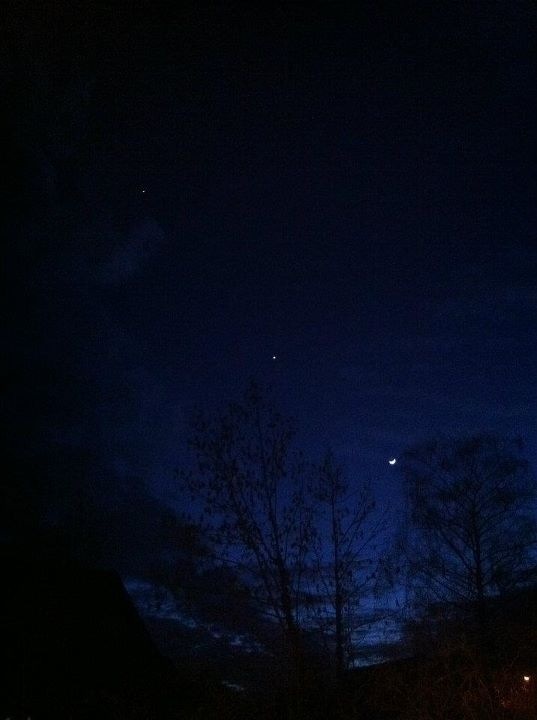
i have taken pics with my iphone, few weeks ago (on Feb 24, 2012), when the Moon, Jupiter and Venus were in straight line... here is one of them, but reduced in size... hope still visible :)
Top left: Jupiter
Center: Venus
Bottom Right: Moon
Location Stäfa/Zurich
The dirt particles on my laptop screen look like stars :) :)
thanks to your pic :)
The dirt particles on my laptop screen look like stars :) :)
thanks to your pic :)
yes, just after sunset you can see jupiter and venus bofore any of the other stars appear. just look to the south west. if you have a good pair of binoculars or a small telescope, in darkness you can see the 4 moons of jupiter. also, off to the right of jupiter there is a very faint object which is the planet uranus.
at around midnight the planet mars is visible high in the eastern sky and so is saturn, a bit lower. ( just look for the tail end of the big dipper constellation and follow the direction of the last two stars which will point to the faint planet saturn ) so, in all venus, jupiter, mars and saturn are visivle on the same night.
venus and jupiter were in conjunction on the 7th of march ( as they orbit the sun they are in alignment as seen from the earth ) this happens about 2 times in a century!!
the iphone app "go skywatch" is just what you need to identify the heavenly bodies (in the sky, not on earth! ......is there an app for that?)
Thanks Rog - that was really interesting - apparently there's an Android app to track the stars, as well, but haven't been able to access it - if anyone else can help (with Android or even Blackberry), it would be much appreciated as v. interested in astronomy - always have been as it makes us seem so teeny weeny, small and insignificant!!
Thanks Rog - that was really interesting - apparently there's an Android app to track the stars, as well, but haven't been able to access it - if anyone else can help (with Android or even Blackberry), it would be much appreciated as v. interested in astronomy - always have been as it makes us seem so teeny weeny, small and insignificant!!
Sorry - I meant planets.....not just stars!
Sorry - I meant planets.....not just stars!
what your after is called "google sky map", excellent app
if you like the moon.... and if the weather is nice.....
Skywatchers take note: The biggest full moon of the year is due to arrive this weekend.
The moon will officially become full Saturday (May 5) at 11:35 p.m. EDT. And because this month's full moon coincides with the moon's perigee — its closest approach to Earth — it will also be the year's biggest.
The moon will swing in 221,802 miles (356,955 kilometers) from our planet, offering skywatchers a spectacular view of an extra-big, extra-bright moon, nicknamed a supermoon.
And not only does the moon's perigee coincide with full moon this month, but this perigee will be the nearest to Earth of any this year, as the distance of the moon's close approach varies by about 3 percent, according to meteorologist Joe Rao, SPACE.com's skywatching columnist. This happens because the moon's orbit is not perfectly circular.
if you like the moon.... and if the weather is nice.....
Skywatchers take note: The biggest full moon of the year is due to arrive this weekend.
The moon will officially become full Saturday (May 5) at 11:35 p.m. EDT. And because this month's full moon coincides with the moon's perigee — its closest approach to Earth — it will also be the year's biggest.
The moon will swing in 221,802 miles (356,955 kilometers) from our planet, offering skywatchers a spectacular view of an extra-big, extra-bright moon, nicknamed a supermoon.
And not only does the moon's perigee coincide with full moon this month, but this perigee will be the nearest to Earth of any this year, as the distance of the moon's close approach varies by about 3 percent, according to meteorologist Joe Rao, SPACE.com's skywatching columnist. This happens because the moon's orbit is not perfectly circular.
i have taken pics with my iphone, few weeks ago (on Feb 24, 2012), when the Moon, Jupiter and Venus were in straight line... here is one of them, but reduced in size... hope still visible :)
Top left: Jupiter
Center: Venus
Bottom Right: Moon
Location Stäfa/Zurich
. . . you didn't spot Uranus by any chance ?
. . . you didn't spot Uranus by any chance ?
It's where the Sun doesn't shine...
That's not quite true. It can reach a maximal apparent magnitude of 5.5 which is well above the visibility threshold of 6.0 from a dark spot.
That's not quite true. It can reach a maximal apparent magnitude of 5.5 which is well above the visibility threshold of 6.0 from a dark spot.
This is my favorite site for local weather and astronomy.
http://geneva.bgmet.com/
When Jupiter and Venus were hanging out at the end of winter, I used it to figure out what I was looking at. Looking forward to the full moon this weekend! :)
This is my favorite site for local weather and astronomy.
http://geneva.bgmet.com/
When Jupiter and Venus were hanging out at the end of winter, I used it to figure out what I was looking at. Looking forward to the full moon this weekend! :)
I just wanted to share this amazing picture of M42 (Orion Nebula) built with the datas of Hubble and La Silla Observatory
full picture : http://apod.nasa.gov/apod/ap120715.html
There's some stunning stuff up there :)
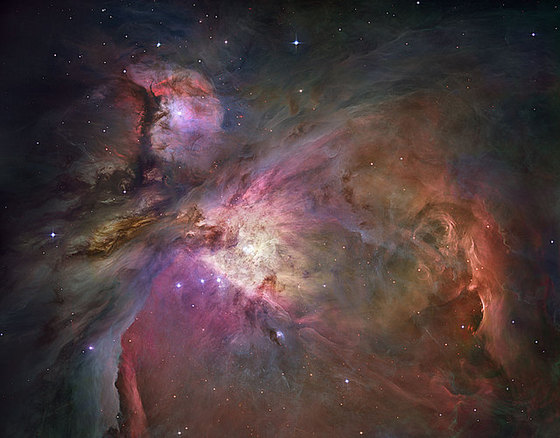
I just wanted to share this amazing picture of M42 (Orion Nebula) built with the datas of Hubble and La Silla Observatory
full picture : http://apod.nasa.gov/apod/ap120715.html
There's some stunning stuff up there :)
Just joined Glocals, so I missed this whole discussion.
I have used the sky and telescope weekly guide for years, as a reliable guide to the sky:
http://www.skyandtelescope.com/observing/ataglance/
Scroll all the way down for their weekly planet round-up.
As for telescopes, if you want a reliable one for the best price, try Meade telescopes.
http://www.meade.com/
The ETX series is great for beginners and you will even love them once you are more advanced.
You can find them and order them through Amazon. They are a lot more expensive if you find them at shops here.
Is there an amateur astronomers' group in Glocals? We could share telescopes, information, and maybe even arrange for a visit to the observatory in the Juras....
Organize group watchings during meter showers?
http://www.skyandtelescope.com/observing/highlights/Meteor-Showers-in-2012-136214528.html
The Perseids on August 12 this year will be quite decent.
Jorge
Just joined Glocals, so I missed this whole discussion.
I have used the sky and telescope weekly guide for years, as a reliable guide to the sky:
http://www.skyandtelescope.com/observing/ataglance/
Scroll all the way down for their weekly planet round-up.
As for telescopes, if you want a reliable one for the best price, try Meade telescopes.
http://www.meade.com/
The ETX series is great for beginners and you will even love them once you are more advanced.
You can find them and order them through Amazon. They are a lot more expensive if you find them at shops here.
Is there an amateur astronomers' group in Glocals? We could share telescopes, information, and maybe even arrange for a visit to the observatory in the Juras....
Organize group watchings during meter showers?
http://www.skyandtelescope.com/observing/highlights/Meteor-Showers-in-2012-136214528.html
The Perseids on August 12 this year will be quite decent.
Jorge
Hey, what gives? I uploaded my photo, and I certainly do not look anything at all like that red "volaille."
Hey, what gives? I uploaded my photo, and I certainly do not look anything at all like that red "volaille."
Bumping this thread, for the Pan-Starrs Comet. Should be visible after the sunset watching West area. Between March 7th - April 11th
sorry for the french map, if somebody wants to post one in English... Now you can possibly recognize the sky from the map.
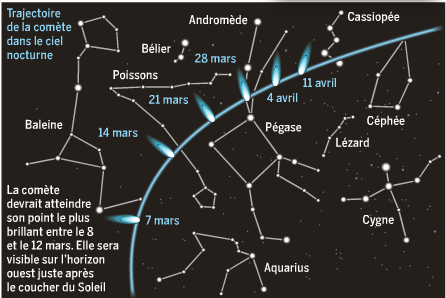
Bumping this thread, for the Pan-Starrs Comet. Should be visible after the sunset watching West area. Between March 7th - April 11th
sorry for the french map, if somebody wants to post one in English... Now you can possibly recognize the sky from the map.
In case of the clear sky : Venus, Jupiter and Mercury are close and can be seen after the sunset. (best seen between 23 - 31 of may)
With binoculars, you can see 4 of Jupiter's moons.
In case of the clear sky : Venus, Jupiter and Mercury are close and can be seen after the sunset. (best seen between 23 - 31 of may)
With binoculars, you can see 4 of Jupiter's moons.
https://itunes.apple.com/de/app/p.m.-planetarium-fur-ipad/id364209241?mt=8
I like the P.M. Planetarium on Iphone Ipad.
I have posted two events at the observatory in Basel.
This site shows some public observatories with contact details;
Just click on the map and get the nearest adresses.
https://itunes.apple.com/de/app/p.m.-planetarium-fur-ipad/id364209241?mt=8
I like the P.M. Planetarium on Iphone Ipad.
I have posted two events at the observatory in Basel.
This site shows some public observatories with contact details;
Just click on the map and get the nearest adresses.
I just read that the Ison Comet was now visible without instrument (if you have a clear sky, of course) and with binoculars, around 6 am.
Here's the map from my astronomy magazine website. (ciel et espace)
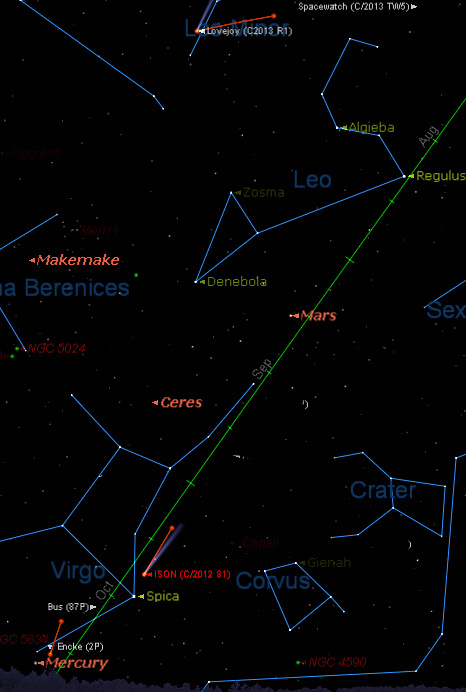
I just read that the Ison Comet was now visible without instrument (if you have a clear sky, of course) and with binoculars, around 6 am.
Here's the map from my astronomy magazine website. (ciel et espace)
if you like the moon.... and if the weather is nice.....
Skywatchers take note: The biggest full moon of the year is due to arrive this weekend.
The moon will officially become full Saturday (May 5) at 11:35 p.m. EDT. And because this month's full moon coincides with the moon's perigee — its closest approach to Earth — it will also be the year's biggest.
The moon will swing in 221,802 miles (356,955 kilometers) from our planet, offering skywatchers a spectacular view of an extra-big, extra-bright moon, nicknamed a supermoon.
And not only does the moon's perigee coincide with full moon this month, but this perigee will be the nearest to Earth of any this year, as the distance of the moon's close approach varies by about 3 percent, according to meteorologist Joe Rao, SPACE.com's skywatching columnist. This happens because the moon's orbit is not perfectly circular.
I'm not an astronomist. I don't even have a telescope. Or binoculars. But I do have common sense and a couple of basic notions, enough to call BS on this article, with all due respect. From what I know, when the moon appears really big, it's because of various gases, dust particles etc that in the right combination act as a magnifying glass. These occurences are of course random and nobody can predict.
It is indeed true that the Moon is sometimes closer to Earth in its orbit but the difference is small, barely noticeable if at all compared to the first effect I mentioned. And it can further be reduced/negated depending on visibility. Further more this year's "supermoon" has already happened, on June 23rd. The next one will be on August 10th, 2014. Source: Wikipedia
So sorry to rain on your parade but nothing to see this weekend, really. Unless you want to see things that aren't there. Btw "Moon" should be capitalized when you are referring to the planet. Me over and out.
I'm not an astronomist. I don't even have a telescope. Or binoculars. But I do have common sense and a couple of basic notions, enough to call BS on this article, with all due respect. From what I know, when the moon appears really big, it's because of various gases, dust particles etc that in the right combination act as a magnifying glass. These occurences are of course random and nobody can predict.
It is indeed true that the Moon is sometimes closer to Earth in its orbit but the difference is small, barely noticeable if at all compared to the first effect I mentioned. And it can further be reduced/negated depending on visibility. Further more this year's "supermoon" has already happened, on June 23rd. The next one will be on August 10th, 2014. Source: Wikipedia
So sorry to rain on your parade but nothing to see this weekend, really. Unless you want to see things that aren't there. Btw "Moon" should be capitalized when you are referring to the planet. Me over and out.
I'm not an astronomist. I don't even have a telescope. Or binoculars. But I do have common sense and a couple of basic notions, enough to call BS on this article, with all due respect. From what I know, when the moon appears really big, it's because of various gases, dust particles etc that in the right combination act as a magnifying glass. These occurences are of course random and nobody can predict.
It is indeed true that the Moon is sometimes closer to Earth in its orbit but the difference is small, barely noticeable if at all compared to the first effect I mentioned. And it can further be reduced/negated depending on visibility. Further more this year's "supermoon" has already happened, on June 23rd. The next one will be on August 10th, 2014. Source: Wikipedia
So sorry to rain on your parade but nothing to see this weekend, really. Unless you want to see things that aren't there. Btw "Moon" should be capitalized when you are referring to the planet. Me over and out.
Catalin, sorry to tell you that your raining on the parade is a little late. That was a post from May. So no, nothing exciting to see this weekend, but back in May it was probably very impressive. By the way, don't believe everything you read on Wikipedia...people often post incorrect information to it!
Catalin, sorry to tell you that your raining on the parade is a little late. That was a post from May. So no, nothing exciting to see this weekend, but back in May it was probably very impressive. By the way, don't believe everything you read on Wikipedia...people often post incorrect information to it!
Actually, a comet like Ison is very exciting.... now with this weather.... but the spectacle will be there for some times...
I still remember the Halley's comet I saw in 1986 !!!
Actually, a comet like Ison is very exciting.... now with this weather.... but the spectacle will be there for some times...
I still remember the Halley's comet I saw in 1986 !!!
It is a bit ironic, when Catalin complains about capitilazation of the word moon, when he also writes it non-cap the first time.
Then he goes on to claim that supermoons don't exist but then points to wikipedia, that the next one will be next year.
Plus, have the words "with all due respect" ever been used with even a hint of respect?
I do think, that wikipedia can be used. At least, it can point towards better sources of information.
It is a bit ironic, when Catalin complains about capitilazation of the word moon, when he also writes it non-cap the first time.
Then he goes on to claim that supermoons don't exist but then points to wikipedia, that the next one will be next year.
Plus, have the words "with all due respect" ever been used with even a hint of respect?
I do think, that wikipedia can be used. At least, it can point towards better sources of information.
It is a bit ironic, when Catalin complains about capitilazation of the word moon, when he also writes it non-cap the first time.
Then he goes on to claim that supermoons don't exist but then points to wikipedia, that the next one will be next year.
Plus, have the words "with all due respect" ever been used with even a hint of respect?
I do think, that wikipedia can be used. At least, it can point towards better sources of information.
It's spelled "moon" when you talk about the light in the sky and "Moon" when you are referring to the planet. Just like you spell "earth" when you are talking about dirt and "Earth" when you are talking about the planet. It's also spelled "moon" when you are talking about the generic term as in the moons of Jupiter. But of course you already knew that.
Wikipedia is an outstanding source of information who's content has the advantage that it can be challenged by anyone based on evidence. Which I invite you all to do whenever you finf inaccurate information. Over and out.
It's spelled "moon" when you talk about the light in the sky and "Moon" when you are referring to the planet. Just like you spell "earth" when you are talking about dirt and "Earth" when you are talking about the planet. It's also spelled "moon" when you are talking about the generic term as in the moons of Jupiter. But of course you already knew that.
Wikipedia is an outstanding source of information who's content has the advantage that it can be challenged by anyone based on evidence. Which I invite you all to do whenever you finf inaccurate information. Over and out.
Stop. Just stop. The moon is not a planet. And it doesn't need to be capitalized.
Stop. Just stop. The moon is not a planet. And it doesn't need to be capitalized.
Just to mention that Planet Mars is on the show at night, rising at the East just after the sunset.
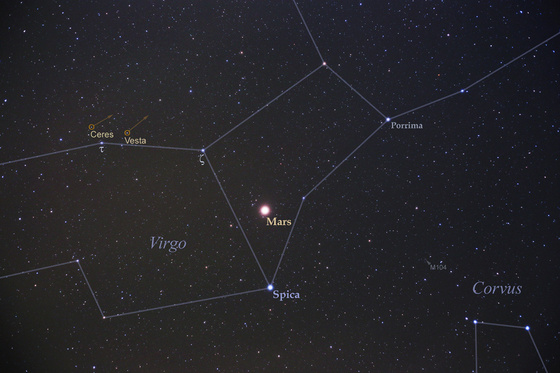
Just to mention that Planet Mars is on the show at night, rising at the East just after the sunset.
this coming monday, the 14th, mars will be the closest to earth (93 million miles ) .
it is visible with the naked eye and appears slightly orangy/red.
if you have a telescope, this would be the best time to have a look.
this coming monday, the 14th, mars will be the closest to earth (93 million miles ) .
it is visible with the naked eye and appears slightly orangy/red.
if you have a telescope, this would be the best time to have a look.