Hi George - congrats on taking the plunge, I hope it goes really well!
Just wanted to adda couple of comments.
1. If you are going for a diamond, please look for conflict-free (ie, non "blood") diamonds, accompanied by a "Kimberley Process" certificate that says they haven't funded a bloody conflict. http://en.wikipedia.org/wiki/Blood_diamond http://www.kimberleyprocess.com/ http://en.wikipedia.org/wiki/Kimberley_Process_Certification_Scheme
Some people also prefer a diamond originating from, for example, Canada or Australia to ensure that it has not funded conflicts.
2. In my opinion, a diamond is not a necessary precondition for a happy marriage; nor is the amount you pay for any piece of jewellery, such as an expensive diamond ring, a direct reflection of your esteem for your loved one. I myself would hate to think that paying a huge amount for an engagement ring would prevent you as a couple from achieving other more practical goals such as a house deposit or even getting engaged in the first place, to echo Julie S!
Remember that there are a number of super sparkly and really cool alternatives, such as moissanite, morganite, or a different jewel. Non-diamond gemstones are a lot less expensive than a diamond. It is perfectly traditional for an engagement ring to have a non-diamond main stone, with or without additional (sometimes diamond) accent stones. The reason that diamonds became assumed to be the main or correct choice for an engagement ring are mainly due to a successful marketing campaign by De Beers and some other houses dating from around the 1930s. The "A diamond is forever" slogan invented for De Beers by advertising agency NW Ayer & Son was a key tactic: "Young men, who purchased 90% of engagement rings, would be bombarded with the
idea that diamonds were the gift of love. The first campaign aimed at men was
launched in 1939 ... Women, too, would be
targeted with the idea that no courtship would be complete without a sparkling
diamond. Famous houses of worship were featured in follow up advertisements,
establishing a link between diamonds and the sacred tradition of a religious
wedding." (See http://www.gemnation.com/base?processor=getPage&pageName=forever_diamonds_1) I went to an industry talk in 2012 by a De Beers marketing director who was very open about this. Many modern trend-settters have a traditional non-diamond main stone. For example, Liz Hurley and Kate Middleton/Princess Diana's engagement rings are sapphires, Hallie Berry has an emerald, Jessica Simpson has a ruby and from memory one of Sienna Miller's (many and various) rings was a citrine.
Bottom line there is, don't feel you should buy into the diamond marketing or be manipulated into thinking that only a diamond will do, or that somehow she will feel less valued if she does not get a diamond or a smaller (less expensive) diamond.
As a last note, a practical reason to choose a diamond (and a sturdy type of metal for the setting, and a good solid type of setting) may be that an engagement ring (as for a wedding band/ring) is meant to last a long time. Some other precious stones may not be able to withstand the wear and tear of being worn every day over many years. You would need to check if you are getting a stone that will or won't stand up to the happy years of your future together! If she is outdoorsy and plans on wearing her ring to go windsurfing on Lac Leman, for example, be mindful of that (and get a more recessed setting for example).
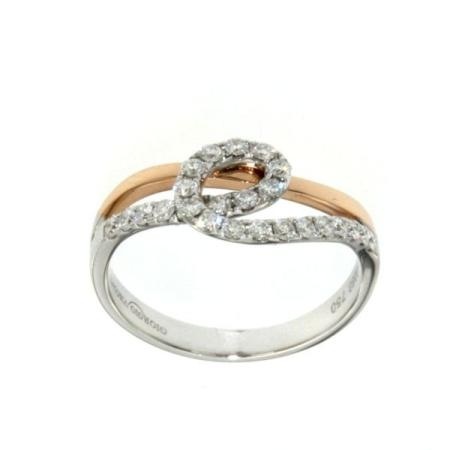
3. Having said all that, diamonds are pretty. So here are some options if you do decide to go for a diamond.
(i) Synthetic. According to the same De Beers rep at the talk I went to, all the natural diamonds in the world could fit inside a double-decker bus. Not only that, but the extraction of natural diamonds seems to be slowing down as mines are exhausted and fewer natural diamond fields are being discovered. It seems that diamond companies are going to probably move further into the manufactured or synthetic diamonds market.
So if you wanted a diamond, you could think about a manufactured, rather than a natural, diamond (they have exactly the same structure and properties, and are usually more "perfect" than a natural diamond). But, again according to the De Beers rep, people prefer natural diamonds for the connotation of purity/naturalness and their scarcity.
(ii). Having it made or sourcing outside Switzerland. I would tend to agree with the other posters that anywhere outside of Switzerland may be better to get said diamond. A good friend went around Geneva looking at the designs in the big expensive jewellery stores like Tiffany's and Cartier, and once she knew the kind of design she liked, she and her future intended went together to Brussels to have someone make it specially for them. They ended up with a beautiful ring of excellent quality but for much less than they would have paid here from a shop. However, that might take a little while so might not be so interesting to you if you don't want to wait!
Next, I would say that there are a number of less expensive rings, including diamond engagement rings, with cool designs, available online, for example through the "Etsy" portal that allows small-scale jewellers to market themselves directly. For example, https://www.etsy.com/browse/jewelry/rings/handmade-engagement?h=fcb6a3c1&lid=176288428&ref=cat_subcat_title_1 Many of these people will be able to custom-make you a nice ring.
Also, there are those cool meteorite rings available too! https://www.etsy.com/shop/jewelrybyjohan
The last thing that I would add is that it can be difficult to tell whether a stone is a diamond, and particularly difficult to tell the difference between a natural and a synthetic diamond: http://www.wikihow.com/Tell-if-a-Diamond-is-Real. (And this makes me wonder - if it is that hard to tell it is a diamond or even a natural diamond, what is the point in buying the difference?)
And now you guys know as much about this topic as I do... I'm surprised I even knew that much!
Best of luck!


 I want to propose to my girlfriend, but I don't know which brand to choose for the engagement ring... :-(



 And many times they had nice things in their show window which made me nearly buy something, that I don't need – but it looked so adorable